
Ultracold@HKU
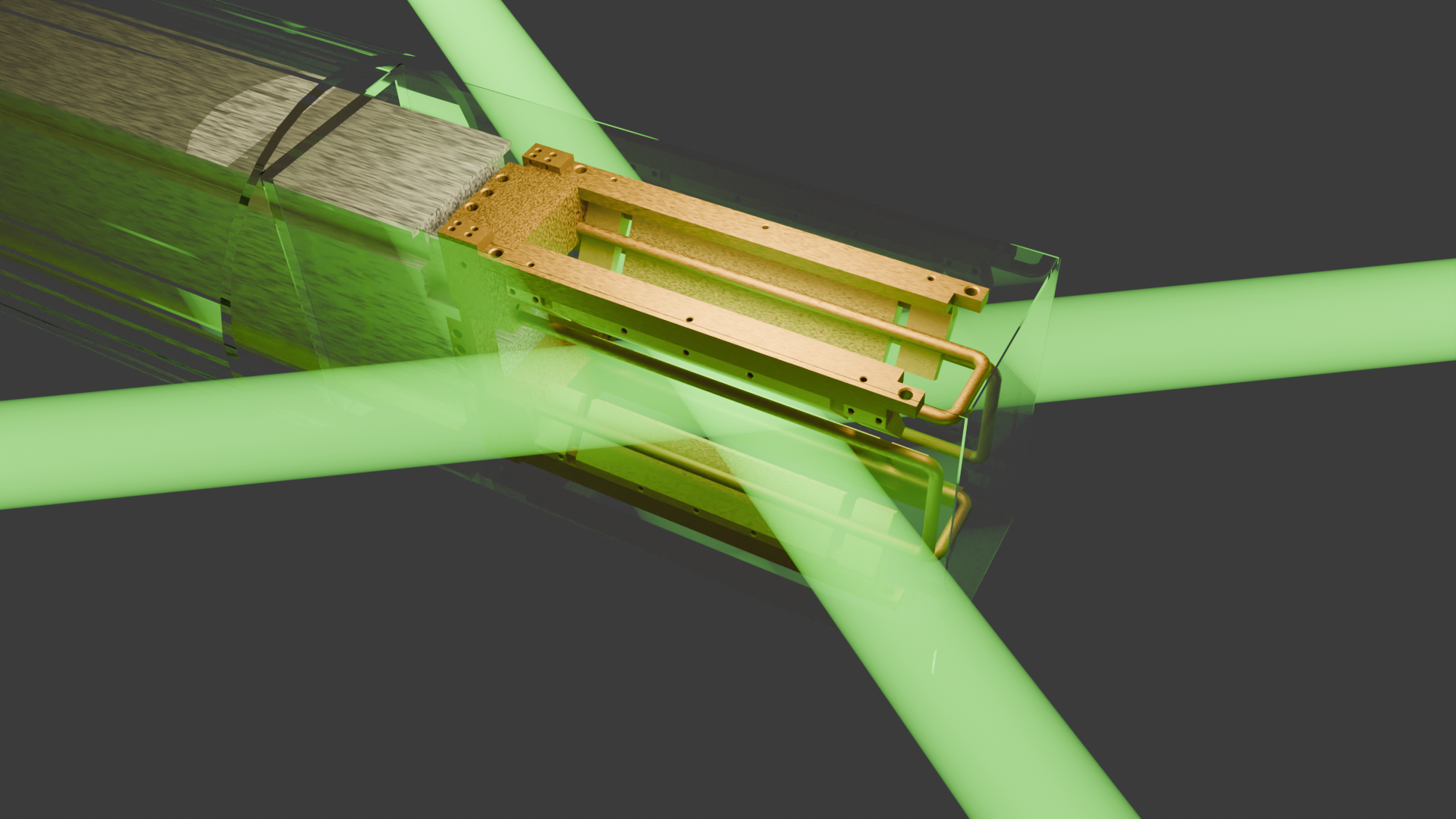
Ultracold Atom-Ion Hybrid
Adding the charge degree of freedom into ultracold neutral atoms
Experimental atomic, molecular and optical physics: This research lab focuses on the preparation, manipulation and detection of ultracold neutral atoms, molecules and ions using laser light, external electric and magnetic fields and high finesse multimode optical cavities. Such quantum experiments inside ultra-high vacuum chambers provide a pristine and versatile platform for the exploration of quantum phases of matter and their dynamics at mesoscopic scale with the precision of atomic physics. The preparation of atoms and molecules close to absolute zero temperature also offers unique opportunities for discovering laws governing ultracold chemistry, where quantum superposition and entanglement dominates the reaction process. Recent research includes the realization of the transition from an atomic to a molecular Bose-Einstein condensate (BEC), observation of the associated quantum many-body chemical reaction process and novel quantum dynamics in periodically driven atomic BECs.
Direct Ionization of Ultracold Atoms
Ionize near-threshold
All Optical Trapping of Ions
Optical tweezer trapping ions
Atom-Ion Hybrid System
Finding new paradigm for ultracold experiments
Degenerate Multi-Mode Cavity
Cavity QED and trapping at scale
Direct Coupling to Gauge Field
Gauge fields can directly couple to the charge in ultracold atom-ion system
Impurity Physics
New type of polarons and charge Kondo physics
Yb Neutral Atom Quantum Computing
Alkali-Earth-Like Metal Neutral Atom Quantum Computing
Ytterbium has rich electronic structures, possessing broad, narrow and clock optical transitions and optically trappable Rydberg states. Different tasks in quantum computing—such as gate operations and state readout—can be facilitated by different optical transitions. Naturally abundant fermionic Yb isotopes further provide nuclear spins suitable for coherent qubits.
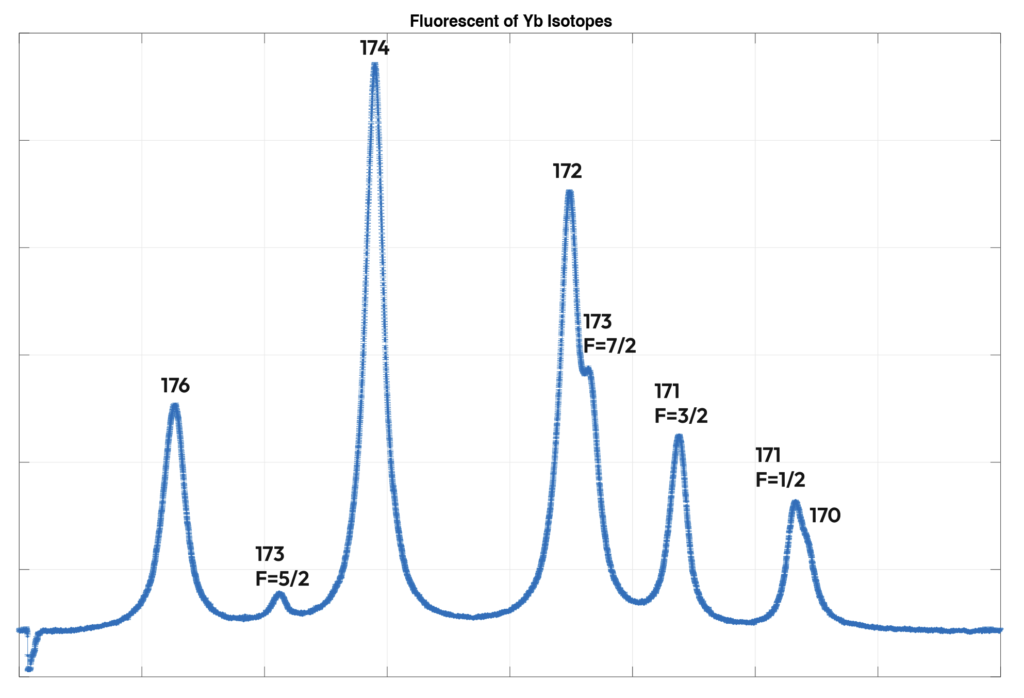
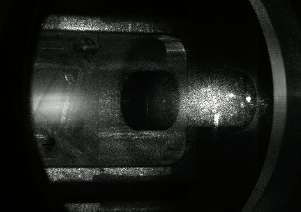
Our lab specializes in leveraging the rich AMO tool box to make Yb qubits under control, with the outlook of establishing technological foundations for next-generation fault-tolerant quantum computing devices.